
01 · Read in context
1 Corinthians 15:58 KJV
Open your Bible and read the whole passage before returning to the excerpt.
Supporting Scriptures
- 1 Corinthians 15:3–4 KJV
- 1 Corinthians 15:14–20 KJV
- 1 Corinthians 15:54–57 KJV
Morning Glory sermon · Morning Glory
Your labor in the Lord is not in vain.
From the moment into the walk
Arriving from a social excerpt? Keep the message connected to its Scripture and carry one faithful response into your life.
These excerpts are released. Each belongs to this teaching; use the Scripture and reflection below to continue.
01 · Read in context
Open your Bible and read the whole passage before returning to the excerpt.
02 · Reflect
Pause with the question. You do not need to submit or share your answer here.
03 · Respond
Read 1 Corinthians 15:14–20 and 54–58. Use the learning guide to identify one God-given responsibility, clarify one uncertain burden, and take one faithful, sustainable step this week.
Saved only in this browser, without account or device sync. View saved items and storage details.
Continue through the teaching record →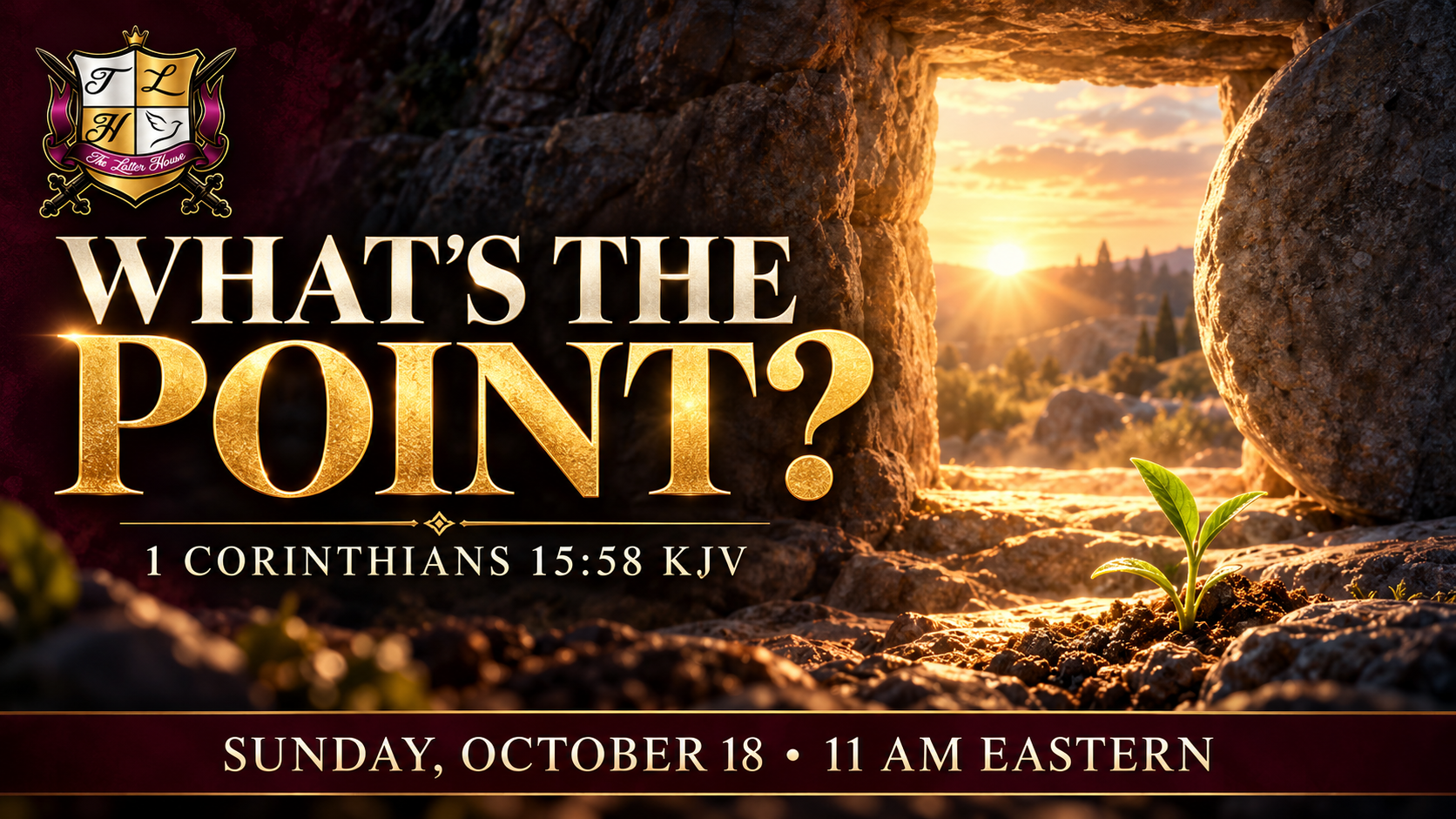
The sermon burden
Your labor in the Lord is not in vain.
Visitor learning resource
You can keep showing up while quietly losing confidence that your obedience matters. WHAT’S THE POINT? brings that question into Paul’s resurrection chapter rather than answering it with pressure to work harder.
Read 1 Corinthians 15:14–20 and 54–58 alongside this guide. Christ’s resurrection gives labor in the Lord its meaning. The response is both steadfastness in what He assigned and discernment about burdens He never gave.
Guided study
1 Corinthians 15:14–19 KJV
Paul faces the consequences of a Christ who has not risen: preaching would be vain, faith would be vain, and believers would remain in their sins. He does not reduce the gospel to useful principles, encouraging feelings, or a successful gathering.
The question is therefore larger than whether church appears helpful. Christianity rests on the crucified and risen Savior. A full room, strong response, or meaningful experience cannot replace Him.
The benefits of Christian faith cannot be separated from the living Christ.
1 Corinthians 15:20, 58 KJV
Paul’s argument turns with the declaration that Christ is risen from the dead. Resurrection is the reality beneath Christian hope, not a feeling that must be manufactured whenever the work becomes difficult.
The same chapter that describes faith and preaching as vain without resurrection declares that labor in the Lord is not in vain. Christ’s resurrection changes the verdict. The promise concerns labor in the Lord; it is not a guarantee that every project, preference, or outcome will succeed.
Christ’s resurrection, rather than visible results, grounds the meaning of labor in the Lord.
1 Corinthians 15:20, 58 KJV
Being needed can begin to function like applause. When usefulness becomes the measure of personal value, a quiet room or a reduced role may feel like a verdict on the person rather than a change in circumstances.
Ask whether the assignment truly changed or whether the recognition it supplied changed. Faithfulness does not require the work to keep making us feel important. Bring motives honestly to Christ without making exhaustion, usefulness, or public response the measure of your worth.
An assignment does not have to make you feel important for obedience to matter.
1 Corinthians 15:58 KJV
Paul names both the work of the Lord and labor in the Lord. These phrases give the command a boundary. Everything available to your hands is not necessarily something God assigned to you.
Difficulty alone does not prove that an assignment is wrong, and capacity alone does not prove that it is yours. Prayerfully examine what belongs to the Lord, what has been added through guilt or the need to be needed, and what should be shared or released. Rest is not rebellion, and burnout is not proof of faithfulness.
Remain faithful to what God gave you without carrying everything that others place before you.
1 Corinthians 15:54–58 KJV
The command to be steadfast follows Paul’s declaration of victory through Jesus Christ. Obedience responds to the victory He gives; it does not purchase resurrection or earn salvation.
Steadfastness does not mean that disappointment cannot shake you. It means that disappointment does not receive final authority to relocate you from a God-given obedience. Remain teachable, receive correction, rest, and keep taking the next faithful step.
Resurrection gives ground beneath your feet rather than another burden upon your shoulders.
1 Corinthians 15:3–4, 20, 58 KJV
An empty-looking result is not the same as an empty hope. The gospel announces that Christ died for our sins, was buried, and rose again. Christian service begins with the living Savior rather than an effort to prove our significance.
Do not pronounce a God-given assignment finished merely because it became quiet. Equally, do not keep reviving something the Lord has instructed you to release. Ask what He actually gave you, then respond through repentance, trust, discernment, and concrete obedience.
Keep carrying what God actually gave you; let Christ’s resurrection have the final word.
Pause and answer honestly
Practice
Set aside a short time with your KJV Bible each day. Keep personal reflections private; no public disclosure is required. Choose a sustainable action rather than adding another burden to prove your commitment.
Write privately where you have been asking, What’s the point? Separate the facts you know from the conclusions discouragement has added. Bring both to the Lord.
1 Corinthians 15:58 KJVList what Paul says would follow if Christ were not risen. Then read verse 20 and write how its declaration changes the argument. Let the text, rather than your mood, lead your response.
1 Corinthians 15:14–20 KJVMake two private lists: responsibilities you understand as entrusted by the Lord, and responsibilities needing clarification. Seek wise counsel about one unclear burden before making a significant change.
1 Corinthians 15:58 KJVChoose one small act of obedience in a clear responsibility. Complete it without using praise or immediate results as the test of whether it mattered. Include needed rest in your plan.
1 Corinthians 15:57–58 KJVRevisit your first reflection. Thank God for the risen Christ, name one burden to clarify or release, and identify the next faithful step in what He has entrusted to you.
1 Corinthians 15:20, 58 KJVPray and respond
Father, thank You for Jesus Christ, who died for our sins and rose again. Forgive us for allowing visible results and recognition to rule our understanding of obedience. Restore our confidence in the risen Lord.
Holy Ghost, clarify what You have entrusted to us. Give us wisdom to release burdens You did not assign, grace to receive rest and correction, and strength to remain faithful when fruit is hidden. Let resurrection hope shape our motives, our service, and our next steps. In Jesus’ name, amen.
Jesus Christ is risen.
My labor in the Lord is not in vain.
Visible results do not have the final word over obedience.
I will seek clarity, receive rest, and remain faithful to what God actually gave me.
Serve by the Spirit · October 18, 2026